
Allergy Center
Breathe Easier with Expert Allergy Care
Allergies cause more than sneezing and itchy eyes. They can interfere with sleep, energy, focus, and overall comfort.
At Trahan ENT & Aesthetics, we know how much a recurring allergy season or constant congestion can affect a person’s life. That’s why we are committed to being there for patients so they can breathe, live, and feel better again.
Our team takes the time to uncover the cause and create a plan that works – for now and for the long term.
Types of Allergy Testing
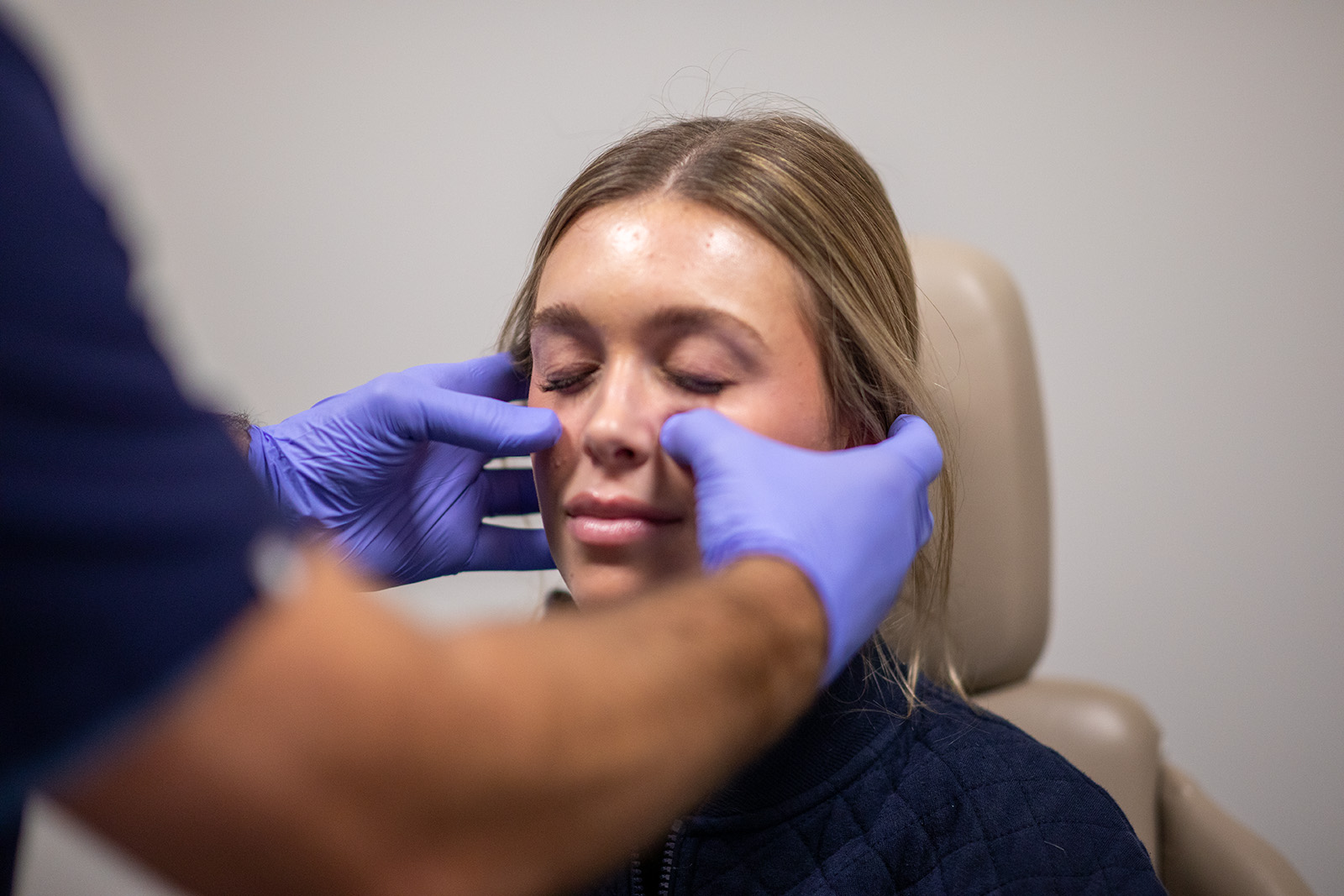
Dr. Trahan and his Allergy team offers comprehensive and painless allergy testing.
We provide testing for:
- seasonal allergies (including allergies to pollen, grass and trees)
- chemical allergies
- food allergies including peanut, dairy, egg and shellfish allergies
- penicillin allergies
- environmental allergies
- mold allergies
- animal and pet allergies
- skin allergies
- insect allergies and bites
- venom allergies
The goal is for you to have an excellent quality of life while being as allergy symptom-free as possible.
Blood Test for Allergies
Blood tests are helpful for identifying allergies to foods, medicines, insect stings, mold, pollen, pet dander, and dust mites.
Blood tests measure the immunoglobulin E (IgE) antibody levels in the blood, which are elevated after an allergic reaction. Generally speaking, there are 2 types of blood tests: total IgE and specific IgE.
Total IgE blood testing indicates if an allergic reaction occurred but will not be able to distinguish the specific allergen. A specific IgE test, on the other hand, measures IgE antibody levels in response to individual allergens.
Blood tests are used when skin testing may cause problems. For example, blood tests are conducted when:
- The patient’s skin is easily irritated as a result of a severe skin condition such as psoriasis or eczema.
- A skin test is too risky to conduct due to medication that interferes with skin testing, and the patient’s medicine cannot be stopped temporarily.
- Testing with a strong allergen may cause an overwhelmingly positive reaction that results in anaphylaxis.
- A skin test must be verified due to a suspected false positive or false negative. For instance, patients who may have a food allergy to crustacean seafood (shrimp, crab, lobster, etc.) may get a false positive skin test. This is due to sensitization to dust mites, spiders, and cockroaches, which are closely related to crustaceans.
Unlike skin tests, blood tests only require a single needle prick. Patients who are on medication can continue to stay on their medicine without it interfering with allergy testing. However, blood results take some time to receive and depending on the test, there may still be false positives. Additionally, blood tests typically cost more than skin tests.
Skin Test for Allergies
Skin testing is considered the primary diagnostic technique for many allergies including allergic asthma, rhinitis, conjunctivitis, food allergies, insect venom allergies, and some drug allergies. Skin tests provide fast results and are less expensive than allergy blood tests.
Skin Prick Allergy Test
Skin prick allergy testing, also called puncture testing, is commonly performed as initial testing. This method involves applying liquid droplets of a concentrated allergen extract to the surface of the forearm or upper back and making a tiny prick through each drop on the surface of your skin. If you are allergic to any of the substances, a raised and red bump (wheal) will appear within 15 to 20 minutes of the skin prick. The diameter of the wheal is compared to the controls to determine if there was a true allergic reaction.
Intradermal Allergy Test
Intradermal allergy testing is typically performed when a prick or puncture test comes back negative but your allergist still believes you may be allergic to a particular substance. This method of allergy testing involves injecting a small amount of allergen extract directly under the surface of the skin through a needle. A negative control without any allergen extract is also injected for comparison purposes. The diameters of any resulting red bumps, known as wheals, are measured to determine if there was a positive allergic reaction. Intradermal tests can help detect weaker allergic responses but can potentially trigger a severe, systemic allergic reaction. For example, intradermal testing is highly sensitive for detecting insect allergies. However, intradermal allergy tests are not advised to test for food or latex allergies due to the possibility of severe systemic reaction.
Allergy Shot Schedule
Shot Clinic Hours
Thank you for choosing Trahan ENT and Aesthetics in Opelousas, LA for your allergy immunotherapy needs.
- Due to the volume of allergy patients and the safety of our staff and patients, we ask that you kindly adhere to our allergy shot schedule as outlined below.
- Appointments are preferred, however, walk-ins are accepted.
- Please, no visitors allowed, unless an adult is accompanying a minor.
Monday
8:30am-12pm, 12:30pm-4:30pm
Wednesday
7:00am-12pm, 12:30pm-4:30pm
Tuesday & Thursday
8:30am-12pm, 12:30pm-3:30pm
SHOT CLINIC IS CLOSED ON FRIDAYS
*Please note that allergy shots are not given between 12:00-12:30pm.
*It is our policy that you have your EpiPen with you for each allergy encounter.
Anaphylactic reactions are very serious, therefore you must comply in order to continue shots.
Allergy shots are usually injected in the upper arm.
To be effective, allergy shots are given on a schedule that involves two phases:
-
- The buildup phase generally takes three to six months. During the buildup phase, the allergen dose is gradually increased with each shot.
- The maintenance phase generally continues for three to five years or longer.
Allergy Shots vs. Allergy Drops
How Do Allergy Drops and Shots Treatments Work?
Allergy drops and allergy shots are a natural way to assist your immune system in building up its own tolerance to the allergen(s) causing your symptoms. Using your immune system as a barrier to the allergen is the optimal solution for long-lasting results. The mechanism behind allergy immunotherapy is simple and elegant and is analogous to lifting weights. The only way to get stronger is to lift more weight. The more often we do so, the stronger we become and the more efficiently our bodies operate.
Similarly, in allergy immunotherapy, a person’s immune system builds up protective blocking antibodies when you receive gradual, stronger doses of allergy drops. The stimulation to the immune system creates a shift in the immune balance to block allergy symptoms instead of developing such symptoms.
The beauty of allergy drops versus injections is that you are getting small, safe doses daily but at the same time, your body is getting a quantity of medication that is one hundred times higher, which leads to immune protection. By building a tolerance to the allergen, the immune system is learning to tolerate and to stop overreacting to what should be a harmless substance.
Allergy Drops or Allergy Shots?
Allergy shots are the gold standard for treatment of Allergic Rhinitis (Allergic Sinus Disease) and Allergic Asthma. Because they are an established treatment, allergy shots are typically covered by insurance, which makes them a more affordable option for some patients. However, some people find the weekly clinic visits required during allergy shot treatment inconvenient. Allergy drops involve the same medications that are used in allergy shots. However, instead of being injected, allergy drops are administered as sublingual (under the tongue) immunotherapy. This method of therapy is self-administered at home.
Both are considered safe, but allergy shots MUST be given under physician supervision until maintenance phase is reached. At Trahan ENT and Aesthetics, our policy does not allow you to take your injections out of the office until you reach your maintenance level, and you attend our allergy shot education session. You must also have a current Epipen/Auvi-Q (dual pack). If it is difficult to make it to our office each week, we can send your serums to another doctor’s office for them to administer the injections prior to reaching maintenance level. This would be efficient if you live out of town or if our current hours do not work well for you.
How Long Does it Take to Start Working? How Long Until I Feel Better?
Allergy shots tend to start working within 3-6 months of starting treatment depending upon how often shots are given. Allergy drops can start working within 8 weeks of starting treatment but with both allergy shots and allergy drops it may take up to 1-2 years to really see dramatic improvement.
During the first year of treatment, you should feel noticeably better. But by the second year, you should not only feel even better but allergic parameters will also show that you are indeed better by medical definition.
How Much Do Allergy Drops and Shots Treatment Cost?
Most health insurance policies will cover a significant amount of the cost of allergy testing and shots through co-pays and deductibles. Allergy drops are considered an off-label use of FDA-approved antigen medication. Because of this, your insurance may not cover the cost of the drops.
Make an appointment today to learn more about which treatment option is better for you.
Let us care for you.
Reach out to schedule your visit or learn more about our services.